 Minglyph
Give the publication a recognizable name.
Explore the lettering at the top of a magazine cover: the publication name, often called the masthead or nameplate. Start with one readable word image and test its proportions within your cover layout.
Free public preview · No sign-up required · See plans and downloads
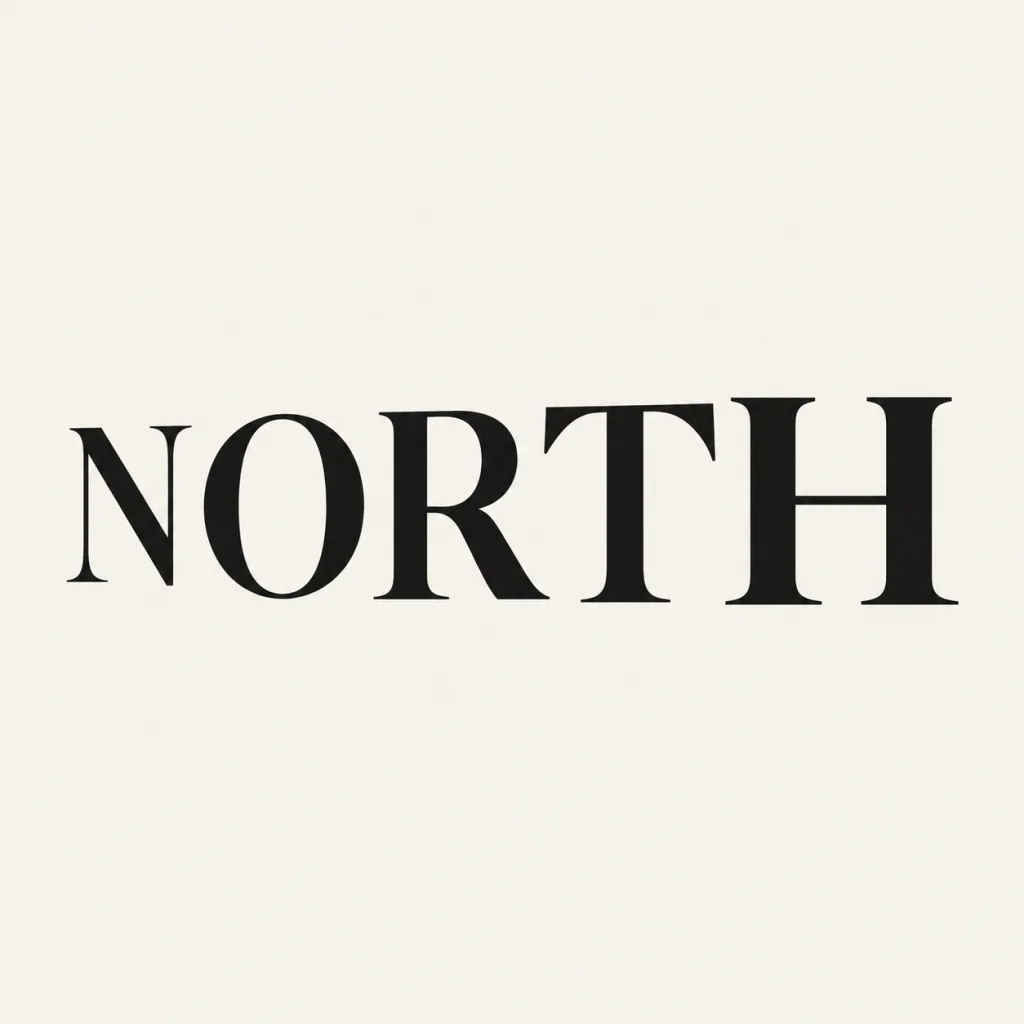
Build recognition through one reading line.
Begin with the exact publication name and one editorial quality. Consider whether its voice is serious, playful or intimate, then use weight, proportion or spacing to express that quality. The selected NORTH image is an earlier independent-brand wordmark reused to demonstrate a clear serif reading line. It illustrates a useful direction; it is not a copied magazine logo or an identity designed for a real publication. Explore the name as a wordmark.
Compare the name with the cover around it.
Place the lettering image in a rough cover with a representative photograph and a few editable cover lines. Check its size, surrounding space and readability together at the final cover width. A word that looks balanced in isolation may become too small beside a headline or lose contrast over an image. Minglyph does not give independent controls for moving individual glyphs or arranging the whole magazine cover. Compare hierarchy and open space.
Separate the concept from repeatable production.
A magazine needs a dependable title across issues. Use the image to select a direction, then reconstruct the chosen identity in your layout or vector tool for repeatable sizing and placement. Check the publication name without a photo first and again on several rough covers. This page uses masthead to mean the cover nameplate; the staff and publishing-information panel is a different design task.
Another way to approach the letters.
Selected studies with their own briefs. Open a direction and replace the text with yours.
A clear voice for a thoughtful brand.
Use this direction
A clear direction for an ambitious idea.
Use this directionFrom your text to a considered image.
- 01
Enter the publication name
Use exact spelling and punctuation. Keep the name within 40 characters, without issue dates or cover headlines.
- 02
Choose the editorial voice
Pick a palette, continue to Studio and describe one quality rather than a famous magazine to imitate.
- 03
Compare at cover width
Place the PNG concept into the rough cover. Check letter proportions, spacing and contrast with the main image and headlines.
Before you create.
What does magazine masthead mean on this page?
It means the publication-name lettering on the cover, also called a nameplate. It does not mean the interior panel listing editors, staff and publishing information.
Does it create an editable magazine cover?
No. This workflow creates square AI word-art images. Build the cover layout, issue text, photo placement and repeatable publication template in a separate design tool.
Why is the sample NORTH?
NORTH is a historical independent-brand wordmark reused as a one-line editorial lettering example. It is not a new magazine commission or a newly generated image; the displayed concept and future results may differ.
Can I make a transparent masthead or vector logo?
The starter artwork has an opaque background. This page does not promise background removal, an alpha-channel export, SVG paths or an installable font. Check the actual download and finish the selected concept separately.
How do I check a name before using it on a cover?
Read every character at full size, then place the image into the rough cover and view it at the intended width. Compare proportion, whitespace and readability together, and check resemblance to existing publication identities.