 Minglyph
Give the recipe a title you can find at a glance.
Choose the exact dish name or a short collection heading, then explore it as a square lettering concept. Build the recipe card in your layout editor, keeping ingredients, quantities and instructions as editable text. A useful title helps someone find the right card without making the cooking information harder to read.
Free public preview · No sign-up required · See plans and downloads
Name the card before styling it.
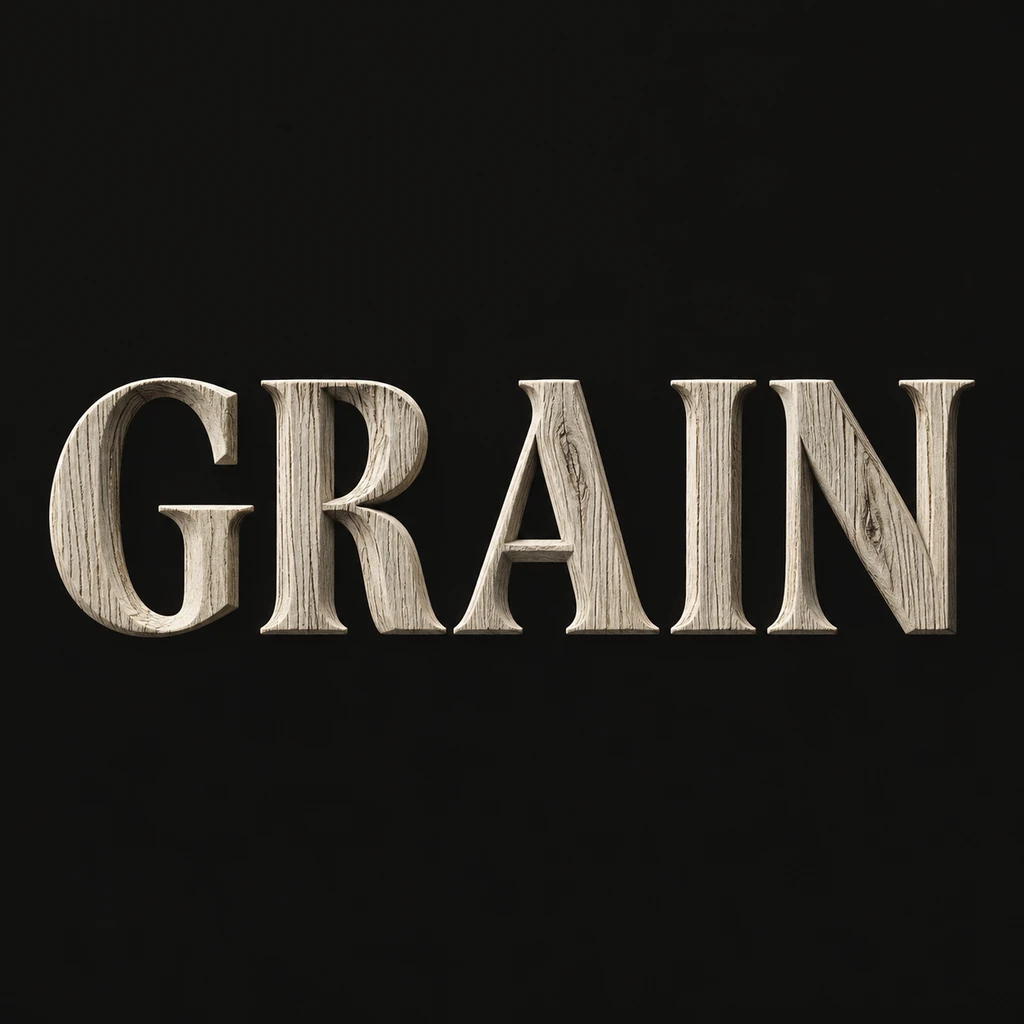
Use wording that distinguishes this recipe from the others in the box. If several dishes share a name, add the useful distinction as editable text in the layout rather than crowding the image. Preserve any family spelling, accent or Chinese character deliberately. GRAIN is an owned September 19 wood-lettering study reused as a possible grain-recipe collection heading; it is not a photographed dish or a completed recipe. A title can carry a material association without turning the ingredients into decoration. Compare a restrained wood-lettering direction.
Reserve most of the card for the recipe.
Set the actual card dimensions and orientation in the editor first. Place the square artwork proportionally in a contained title area; do not stretch it into a banner. Keep its opaque background when composing it. Leave enough space for ingredients, quantities, yield and instructions at a readable size. Use a plain text heading when the artwork consumes space that the cooking information needs. A coffee product name has a different job: it must sit beside package facts rather than a method. Compare a name beside product details.
Proof the details separately from the image.
Check the artwork at full size, then print a rough card at its intended size. Read the heading beside the smallest ingredient line, including fractions and punctuation. Verify the recipe against your own trusted original; Minglyph does not write, validate or check the safety of cooking instructions. A lettering image is not a substitute for searchable recipe text. Keep an accessible digital copy with the recipe written as actual text.
Keep the system useful for the next card.
Save the chosen brief, palette and title-area proportions, then test another recipe name in the same layout. A longer name may need a quieter direction or editable type. Inspect every new result instead of assuming identical spacing or letter shapes across a set. If these cards become a bound recipe collection, judge its cover title separately at cover width. Plan a title for a bound recipe collection.
Another way to approach the letters.
Selected studies with their own briefs. Open a direction and replace the text with yours.

A clear voice for a thoughtful brand.
Use this direction
A small nudge for the work that matters.
Use this directionFrom your text to a considered image.
- 01
Choose one exact heading
Enter a concise dish name or collection title within 40 characters. Leave the ingredients and method outside the image.
- 02
Explore the title direction
Choose a palette and continue to Studio. Describe one useful lettering idea, then inspect every character in the result.
- 03
Assemble and proof the card
Add editable recipe text in your layout editor and print an actual-size draft before preparing the final files.
Before you create.
Does this make a complete recipe card or write the recipe?
It explores a square AI title-image concept. Write and check your own recipe, then assemble the complete card in a layout editor.
Can I edit an ingredient or quantity inside the artwork?
The artwork is a PNG, not an editable text layer. Keep the ingredients, quantities, yield and method as separate editable text in the final card.
Can I choose the card dimensions here?
The generated artwork is square. Set the card dimensions in the layout editor and place the image proportionally, without stretching its letters.
Will the image have a transparent background?
This starter does not promise transparency. Compose with its complete background or rebuild a separate type layer in your editor when the layout needs one.
Can a heading contain Chinese, accents or a brand name?
Supply the exact Unicode text and check every mark and character. Use your own wording or wording you are authorized to use; keep long supporting information as editable text.
Why does the example say GRAIN?
It is an owned September 19 wood-lettering study reused as a short collection-heading reference. It is not a new recipe commission, food photograph or tested printed card.